A Solar Thermal Approach
Decarbonizing Heating at Brown University’s Rockefeller Library
Objective: Designing a rooftop solar thermal system to reduce the Rockefeller Library's dependence on natural gas while maintaining reliable year-round heating.
Brown University · ENGN 0720 Design Competition · Spring 2026 · Team of 5
The Challenge
The existing 20 kW gas boiler delivers about 10 kW of useful heat, resulting in an annual heating demand of 87,600 kWh. The main challenge was designing a solar system that could perform reliably despite Providence’s cloudy, low-irradiance winters.
10 kW useful heat
87,600 kWh/yr demand
4.9 kWh/m²/day average solar resource
10 kW useful heat 87,600 kWh/yr demand 4.9 kWh/m²/day average solar resource
Design Process
Defined the heating demand by converting the existing boiler capacity into a 10 kW useful heat requirement.
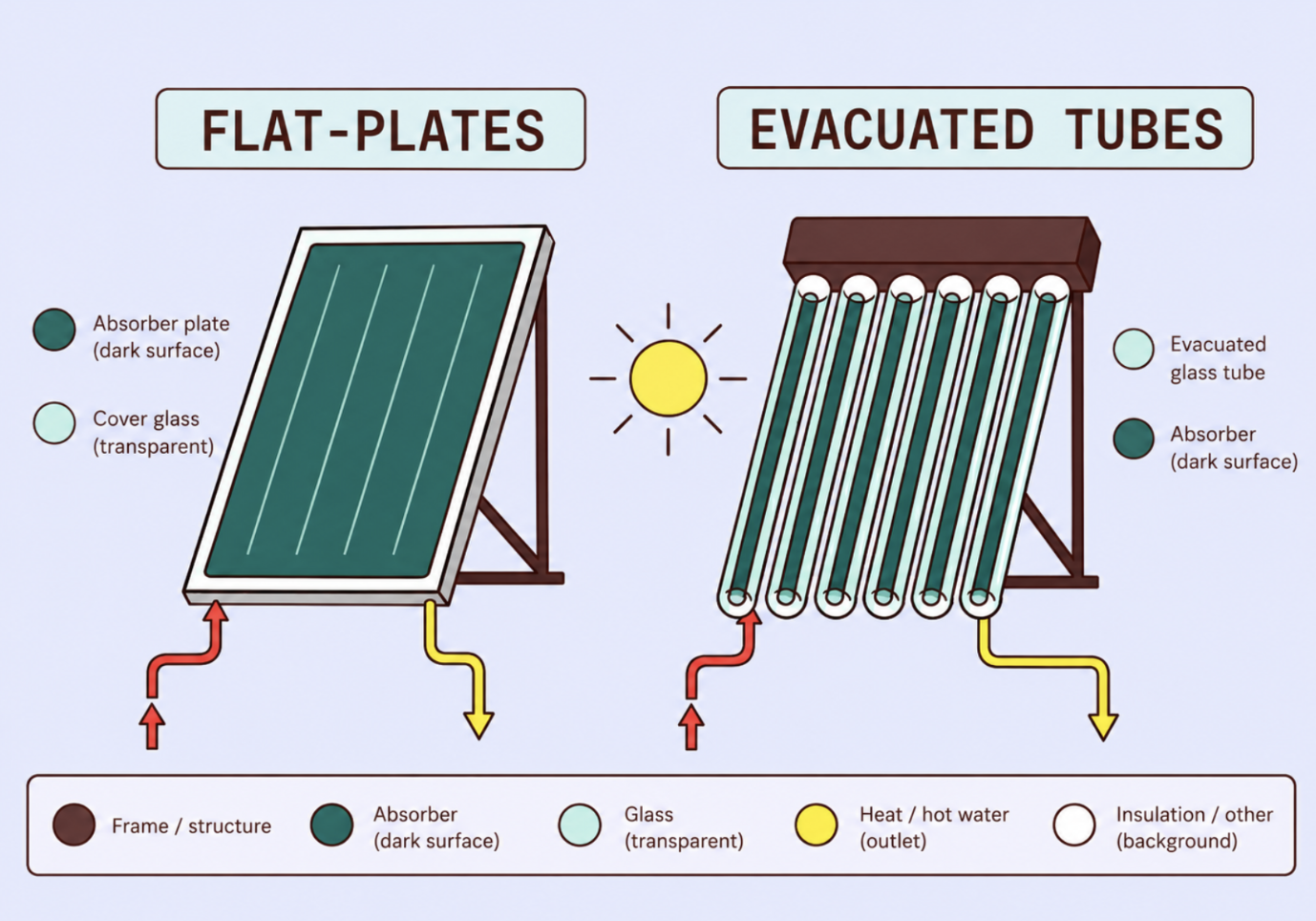
Compared collector technologies and selected evacuated-tube collectors for better performance in Providence’s cold, cloudy winters.
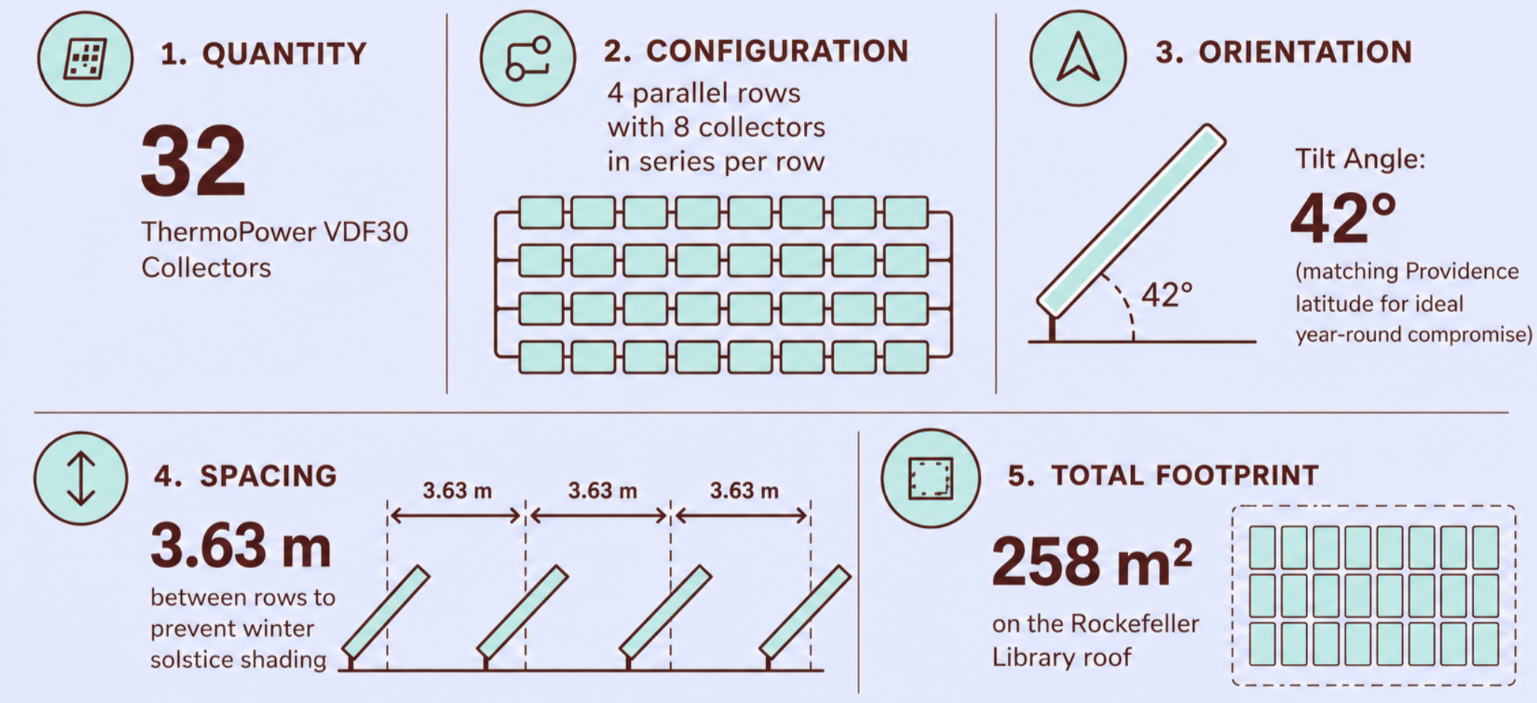
Sized the system to 32 collectors based on local solar irradiance and expected thermal output.
Designed the array layout with four parallel rows of eight collectors, a 42° tilt, and spacing to reduce winter shading.
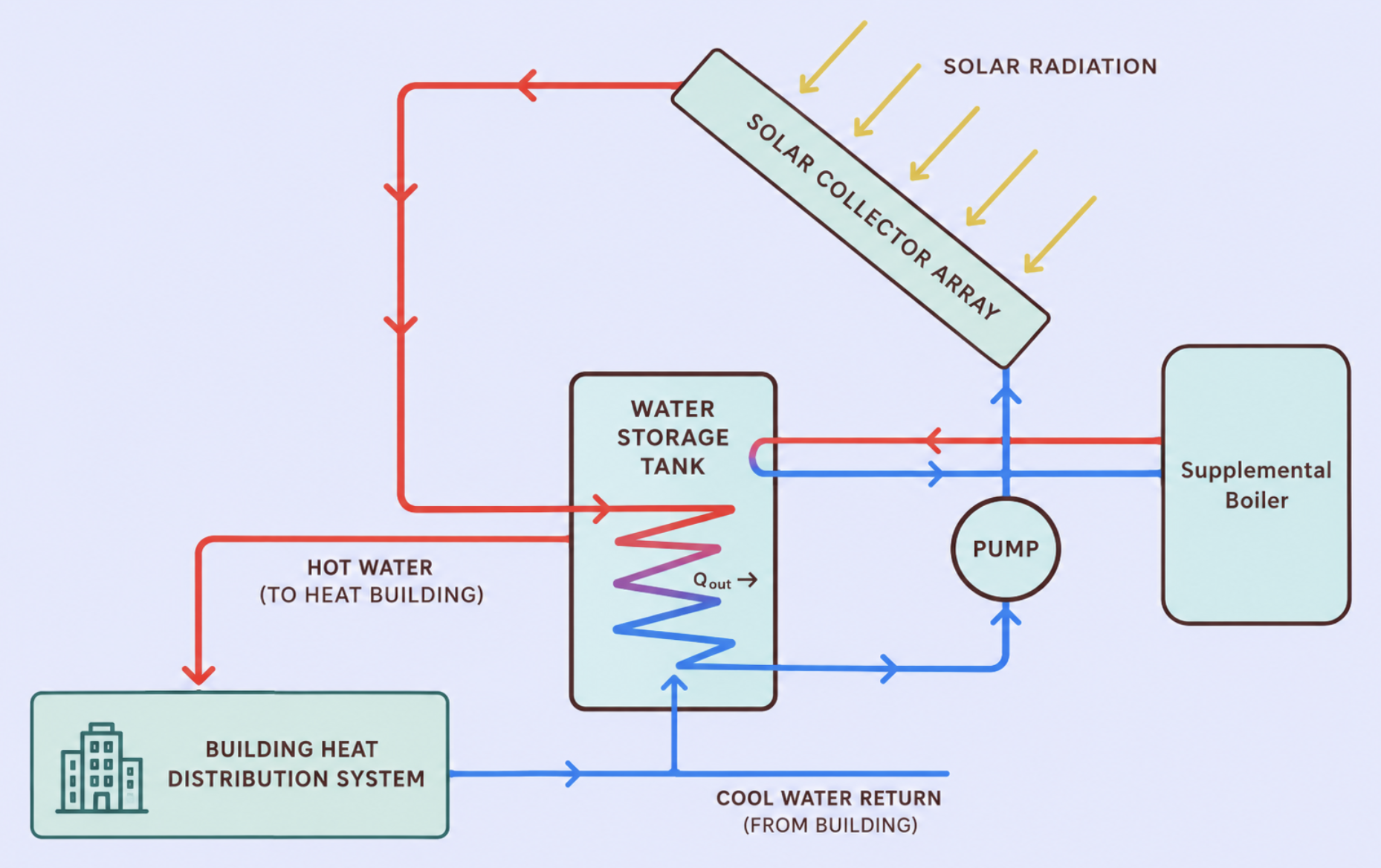
Developed the thermal loop using a glycol-water mixture, pump, heat exchanger, storage tank, and backup boiler.
Evaluated performance and feasibility through flow-rate, temperature, cost, savings, and payback calculations.
We selected evacuated-tube collectors over lower-cost flat plates because they perform better in cold weather and diffuse light. The final design uses 32 ThermoPower VDF30 collectors.
Design Comparison
Final Design
The system uses a glycol collector loop, heat exchanger, thermal storage, pump, and the existing boiler as backup.
Performance + Feasibility
33.8°C estimated winter outlet temperature
~58% modeled annual solar fraction
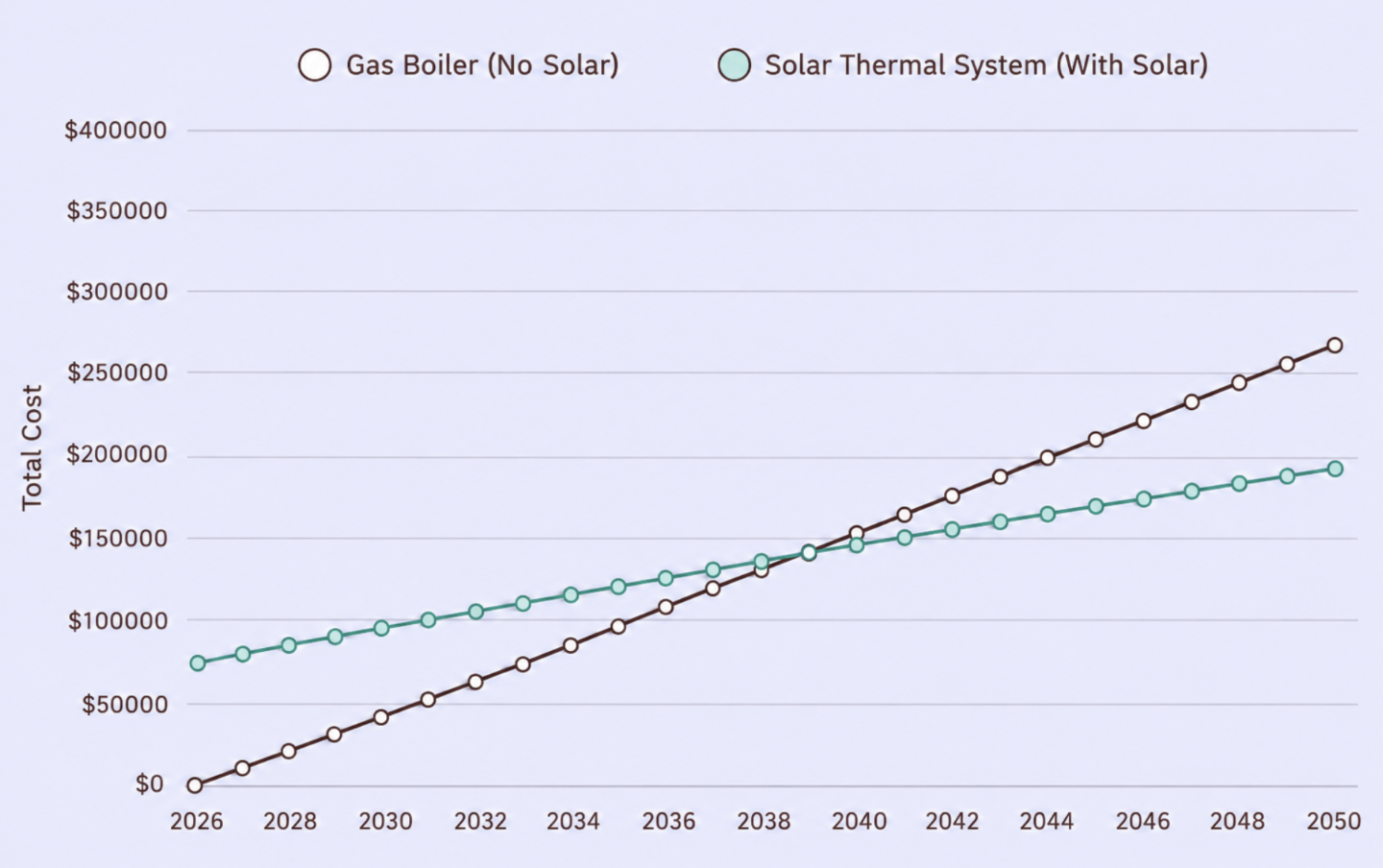
~$72K net project cost after modeled incentives
12.5 years estimated payback
Key Takeaways
This project taught me to balance thermal performance, cost, climate, roof constraints, safety, and existing infrastructure rather than optimizing a single variable.
Final Project Overview
Designed a 32-collector solar thermal system tailored to Providence’s climate and winter heating needs.
Balanced thermal performance, roof constraints, cost, and reliability rather than optimizing for a single factor.
Estimated a ~58% annual solar fraction with a 12.5-year payback period.
Demonstrated how an existing building system can be decarbonized without sacrificing backup heating reliability.