SoleMates - Running Prosthetic
Designing an adjustable prosthetic that grows with young athletes.
Design Engineering
Brown University · Fall 2024 · Team of 6
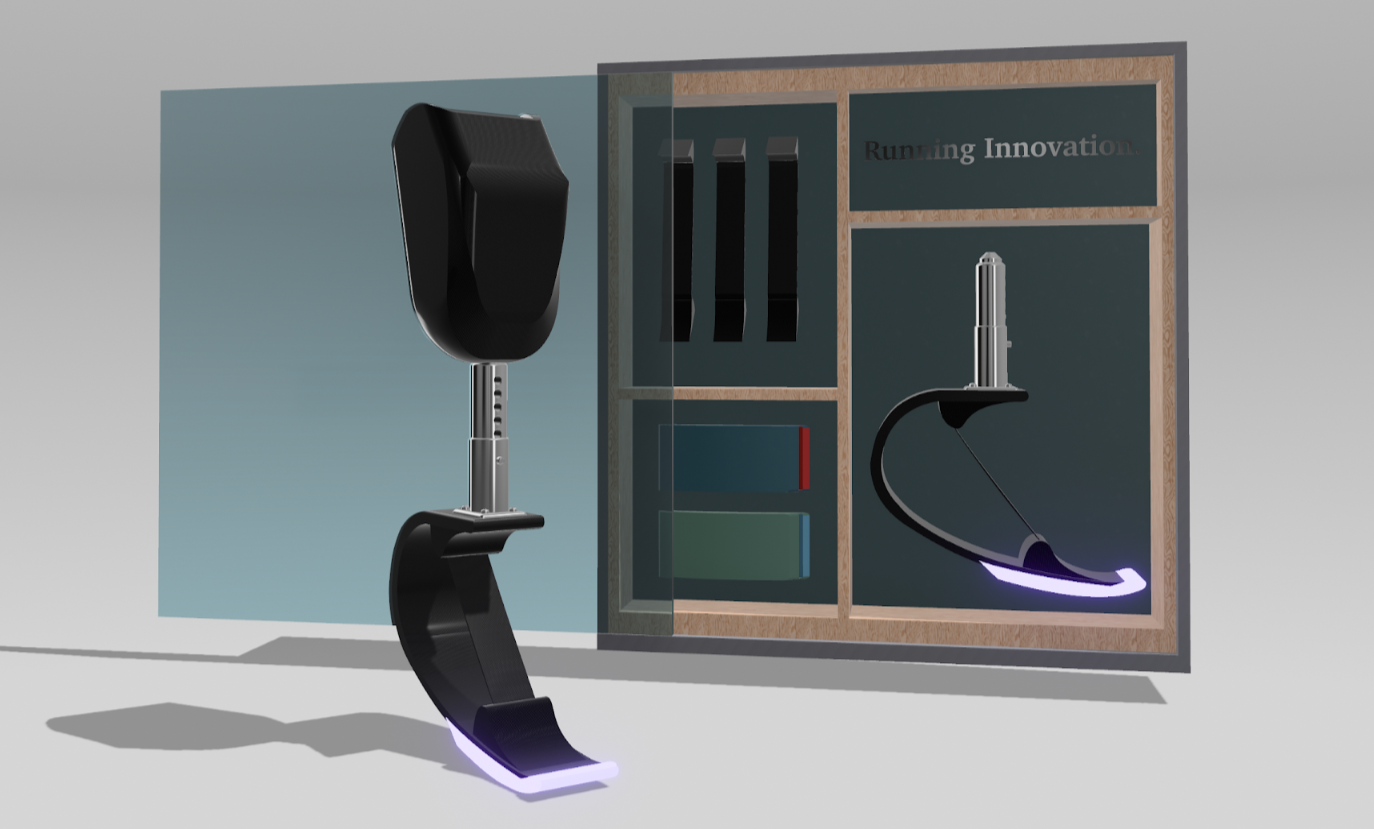
SoleMate is an adjustable running prosthetic designed for growing, active children. Our goal was to create a durable, customizable design that could adapt to changes in height and activity level—reducing the need for frequent replacement as the user grows.
-
![]()
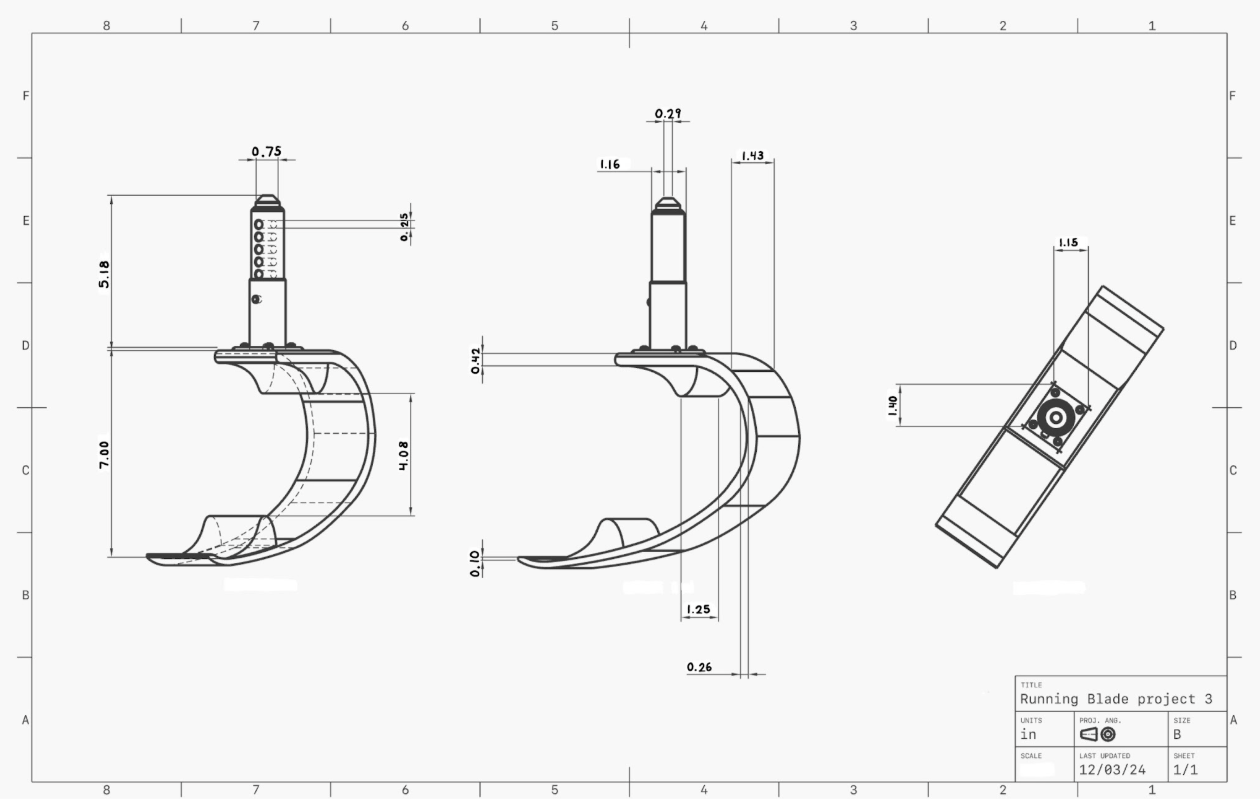
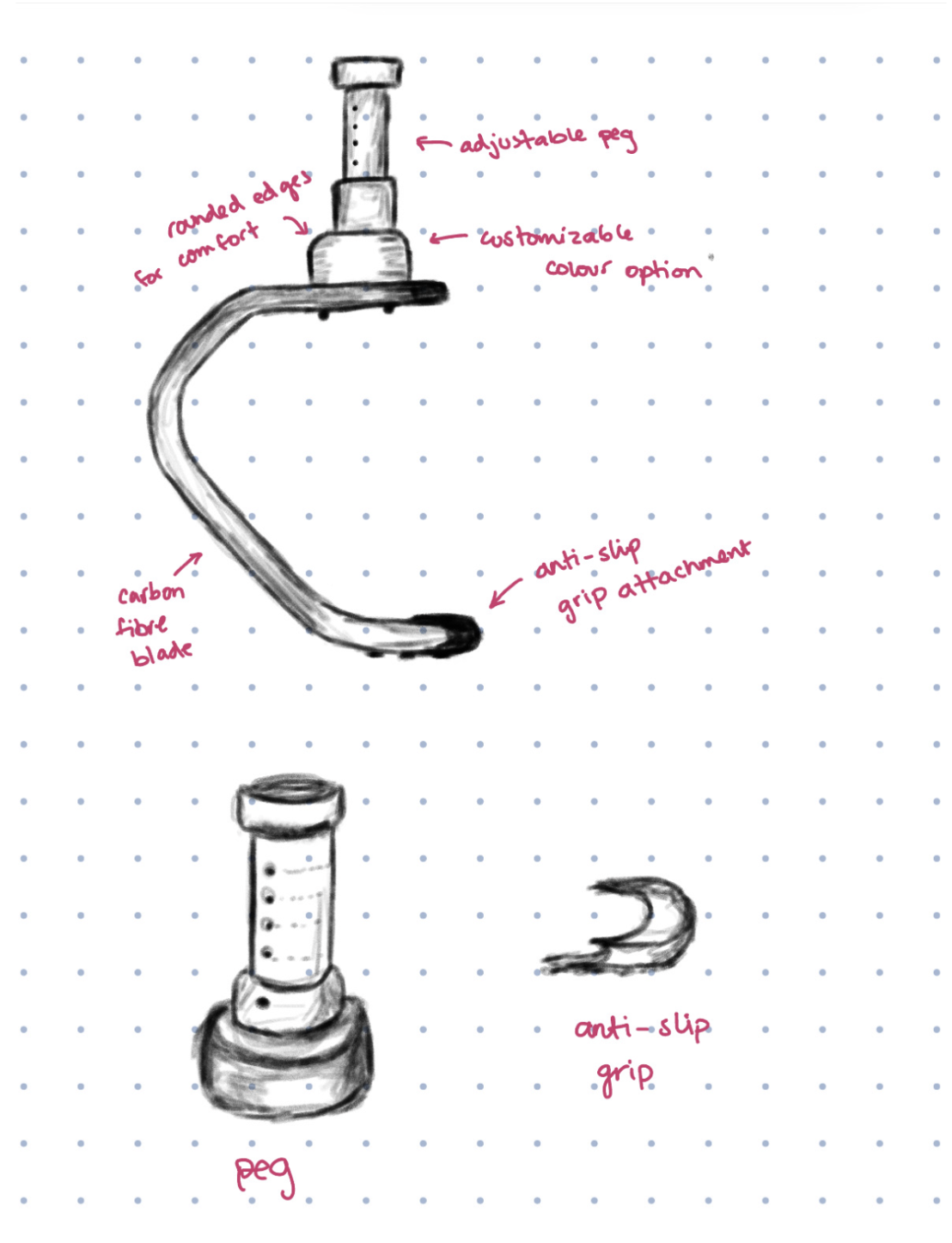
Blade Schematics
-
![]()
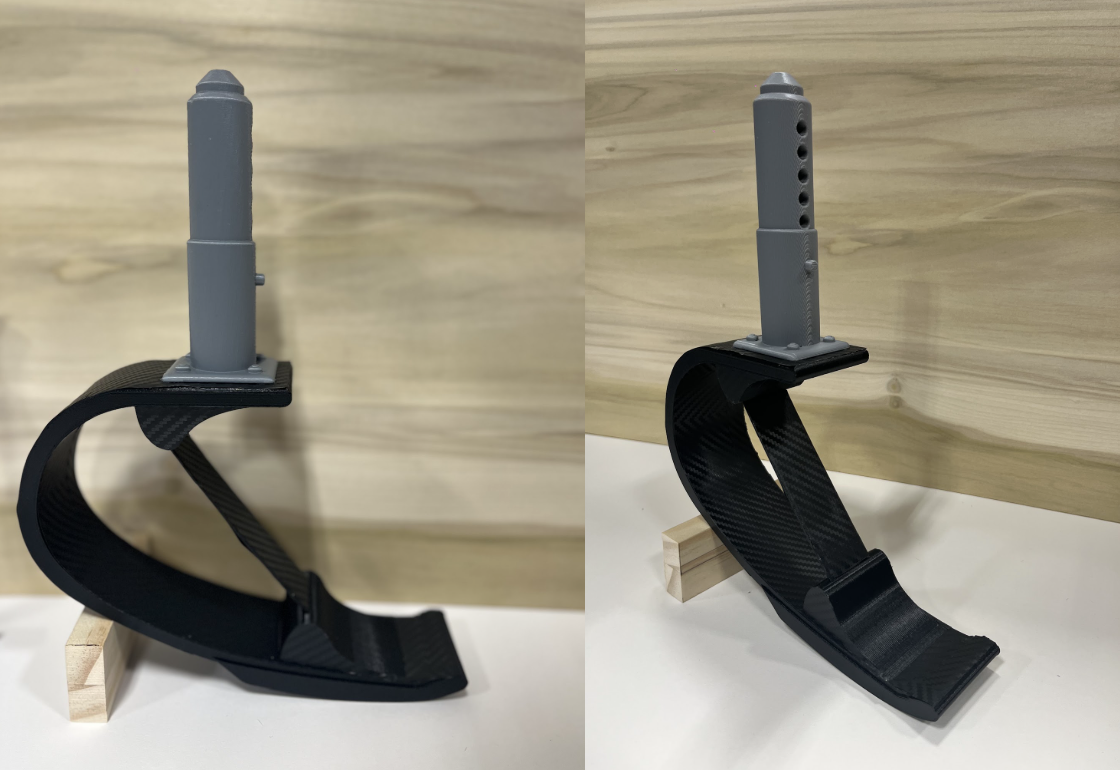
High Fidelity Prototype
-
![]()
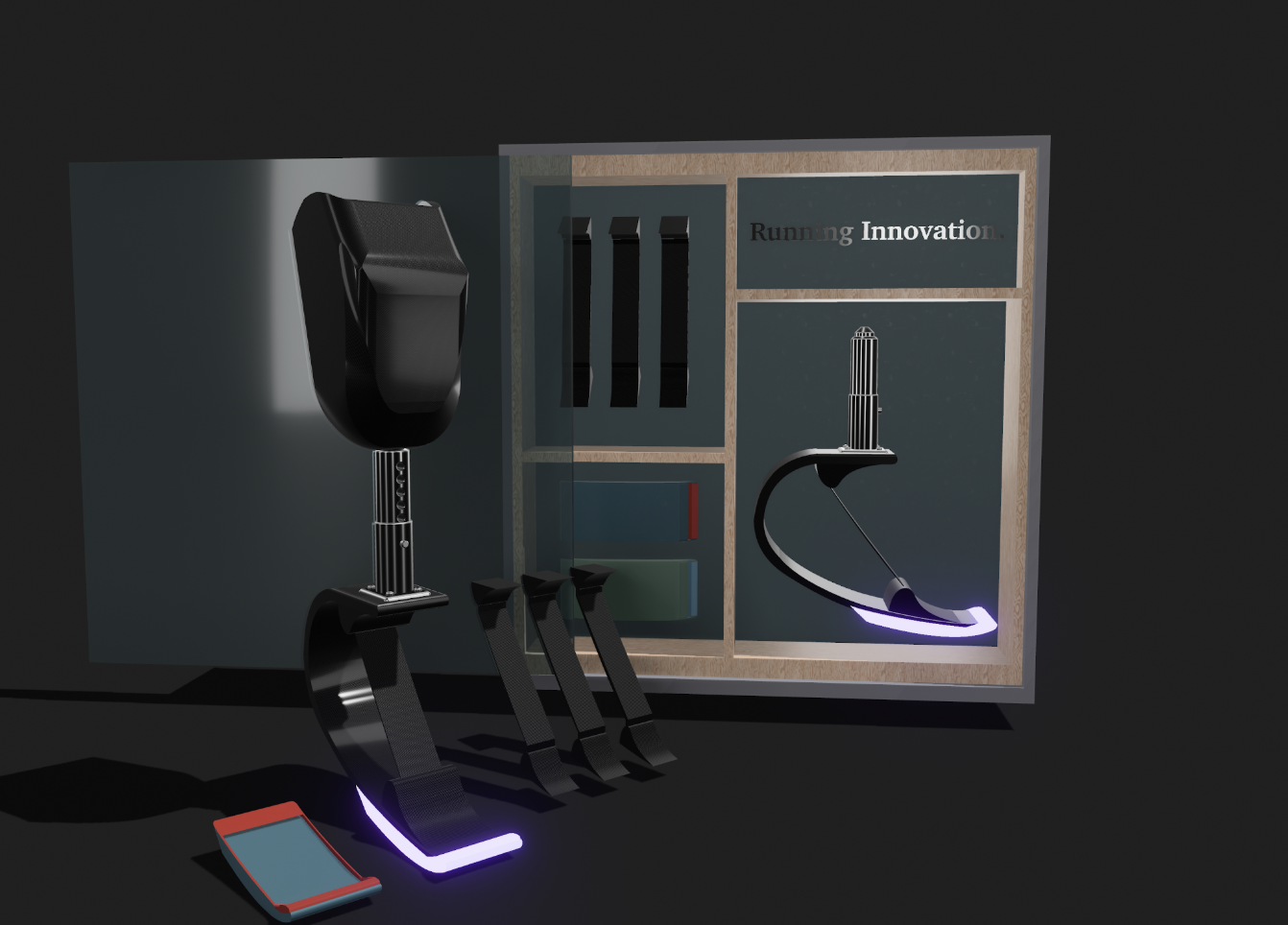
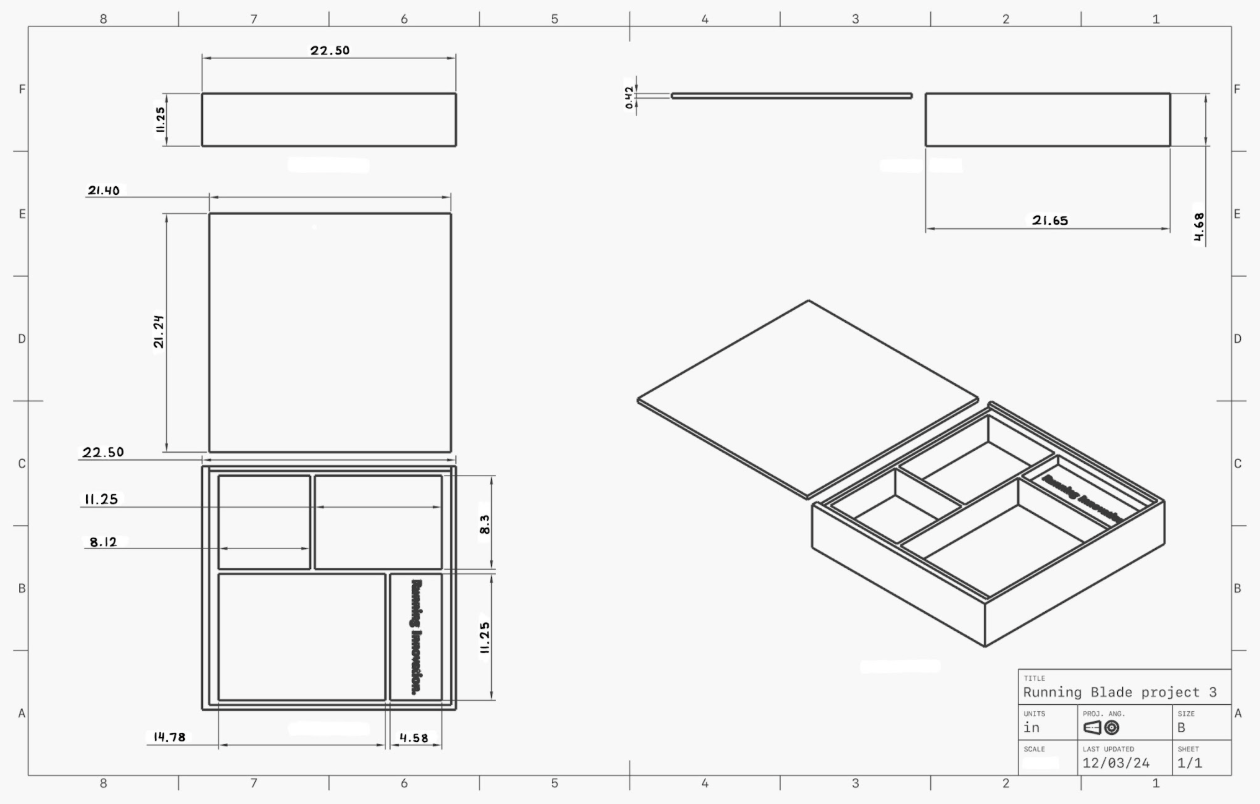
Box Schematics
-
![]()
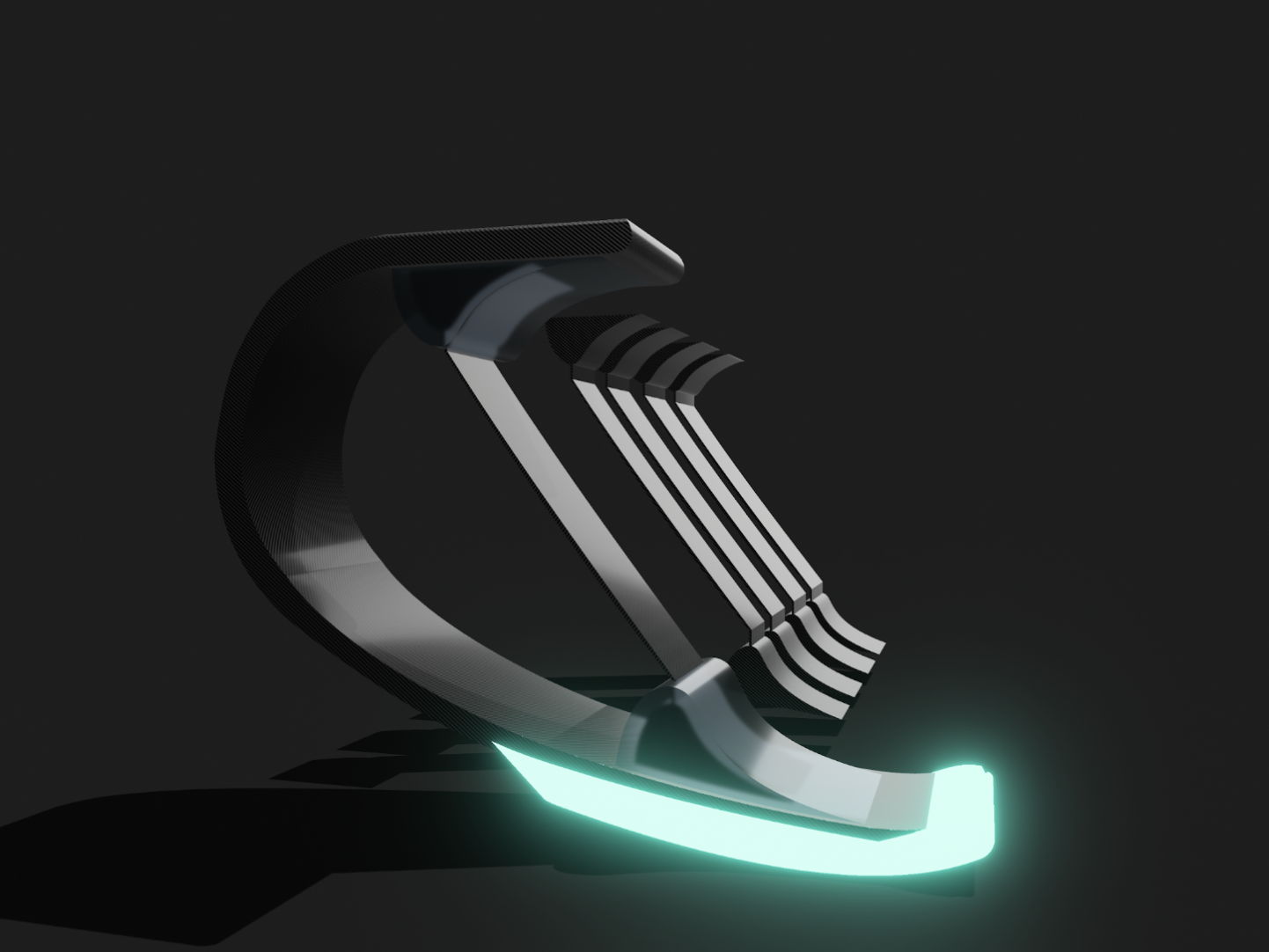
Blade Close-up
-
![]()
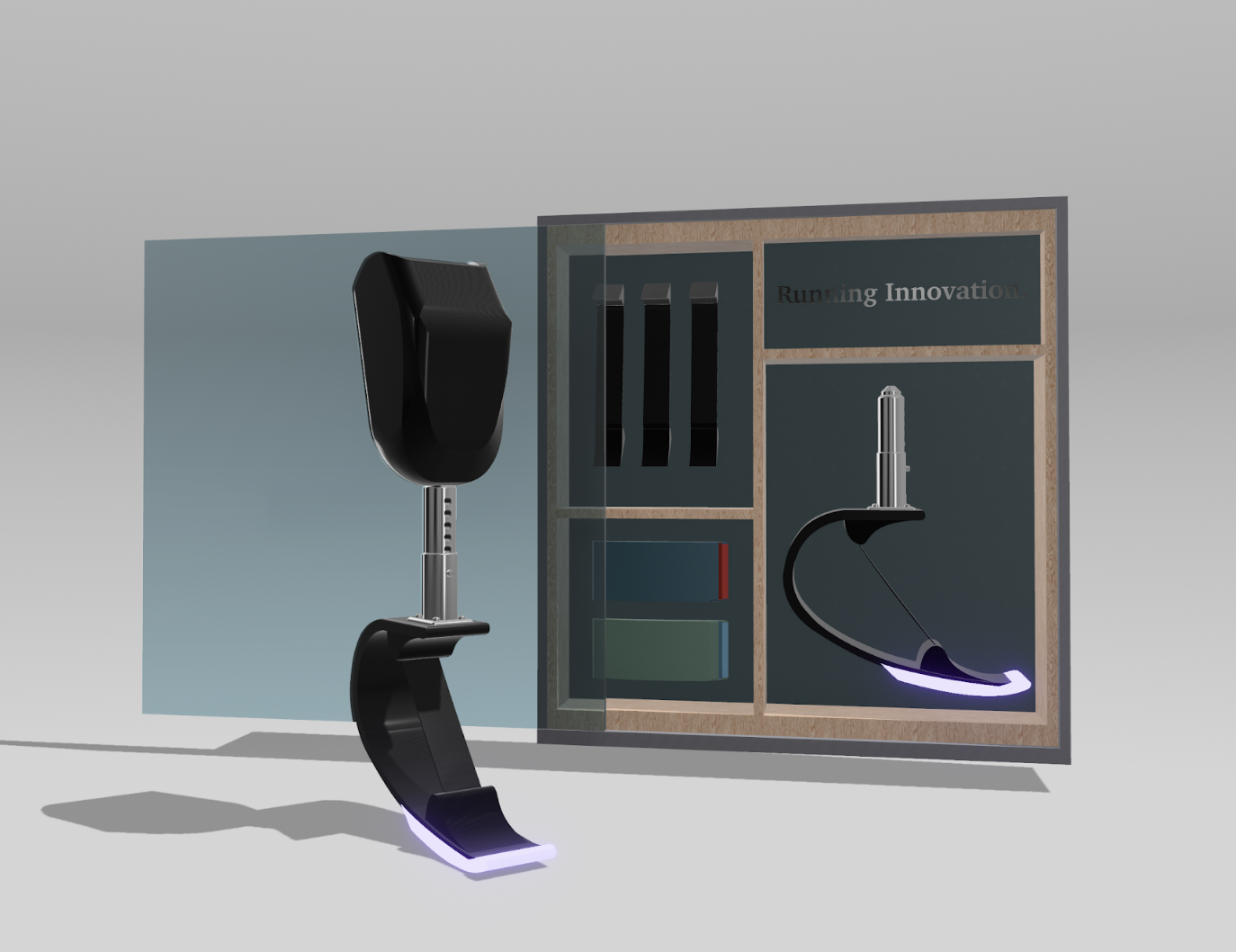
Final CAD Rendering
The Challenge
Designing for Growth
Traditional running prosthetics are generally fixed in size, creating a particular challenge for children who may rapidly outgrow them. Our design focused on longevity, adjustability, comfort, performance, and accessibility for a young athlete.
01 — Adjustable
Adapt as the user grows.
02 — Modular
Configure the blade for different activities.
03 — Durable
Support repeated, high-impact motion.
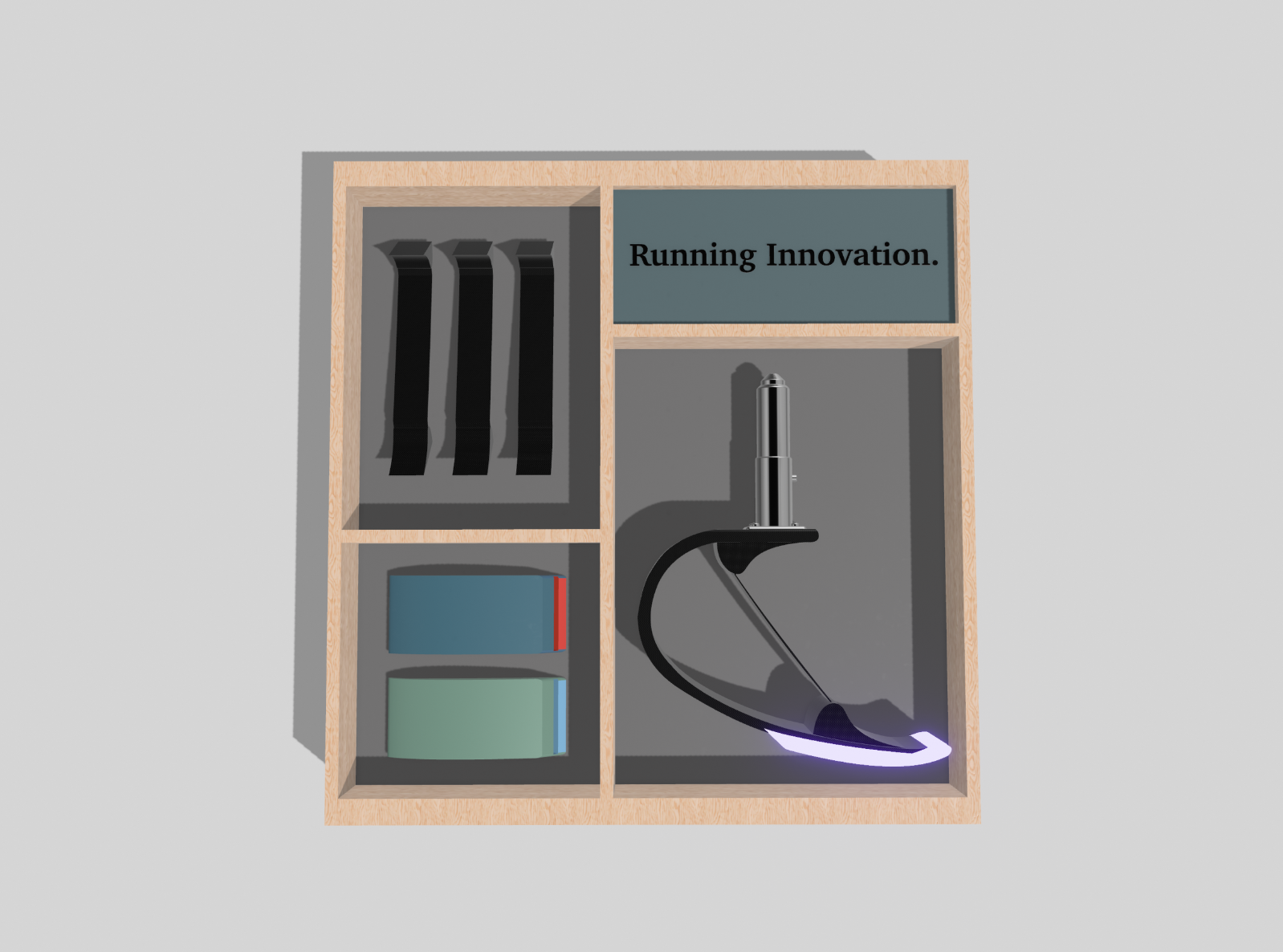
A Prosthetic Designed to Adapt
Our Design
Extendable Pylon
The height can be adjusted as the user grows, extending the usable life of the prosthetic.
Interchangeable Blades
Different “slingshot” components provide varying stiffness and allow the system to adapt to different activities.
Material Selection
Carbon fiber and epoxy resin were selected for their combination of stiffness, energy return, durability, and strength-to-weight performance.
From Idea to Prototype
Research
Studied prosthetic users, existing products, material options, accessibility, and user needs.
Ideate
Generated dozens of concepts focused on adjustability, modularity, comfort, and customization.
Prototype
Moved from sketches and low-fidelity models into CAD and a 3D-printed high-fidelity prototype.
Test
Collected feedback from more than 20 people with direct experience using or supporting below-knee prosthetics.
Refine
Replaced the original pop-in height adjustment with a sliding, bolt-secured mechanism for finer control and greater structural confidence.
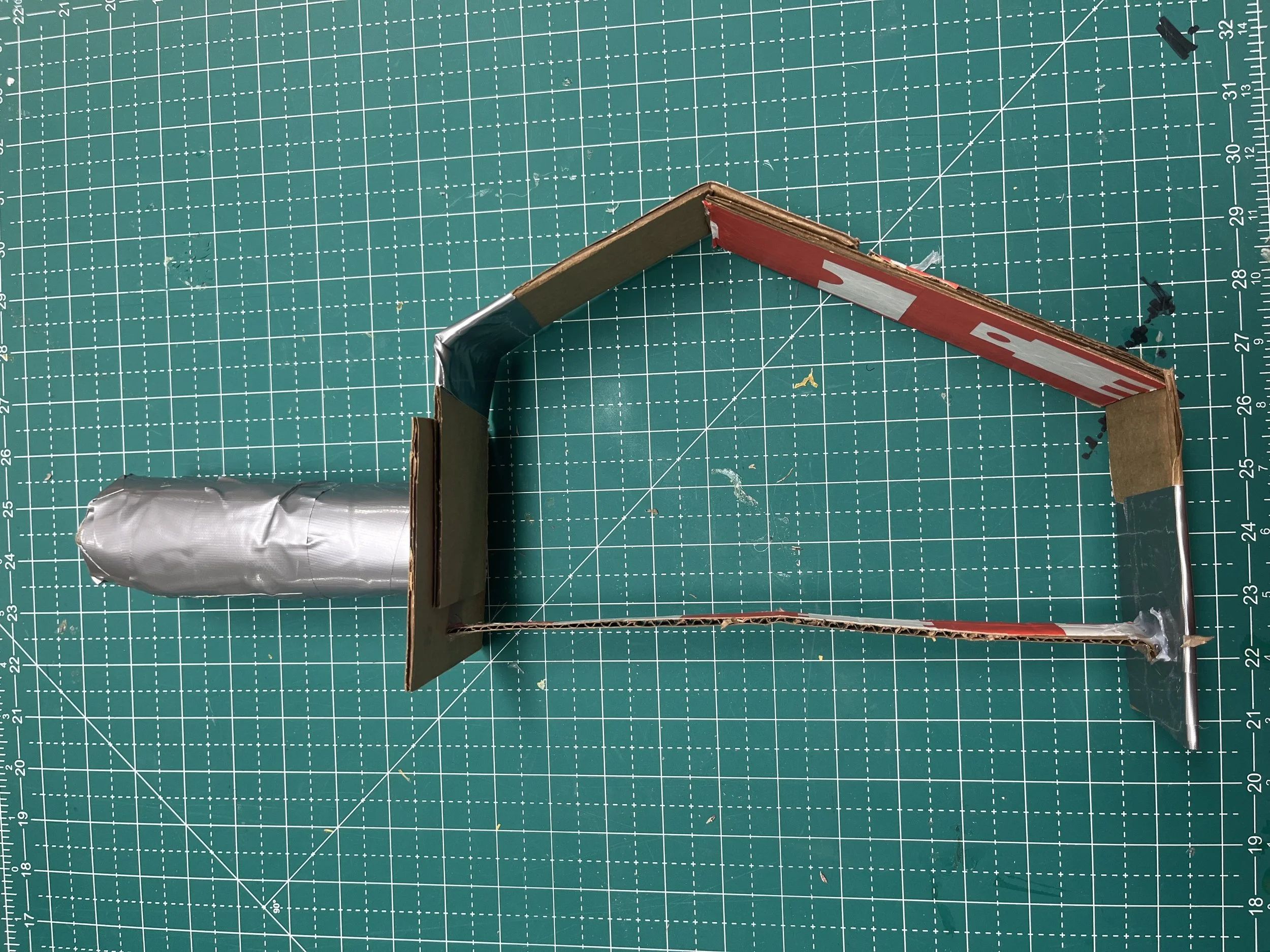
Low-Fidelity Prototype
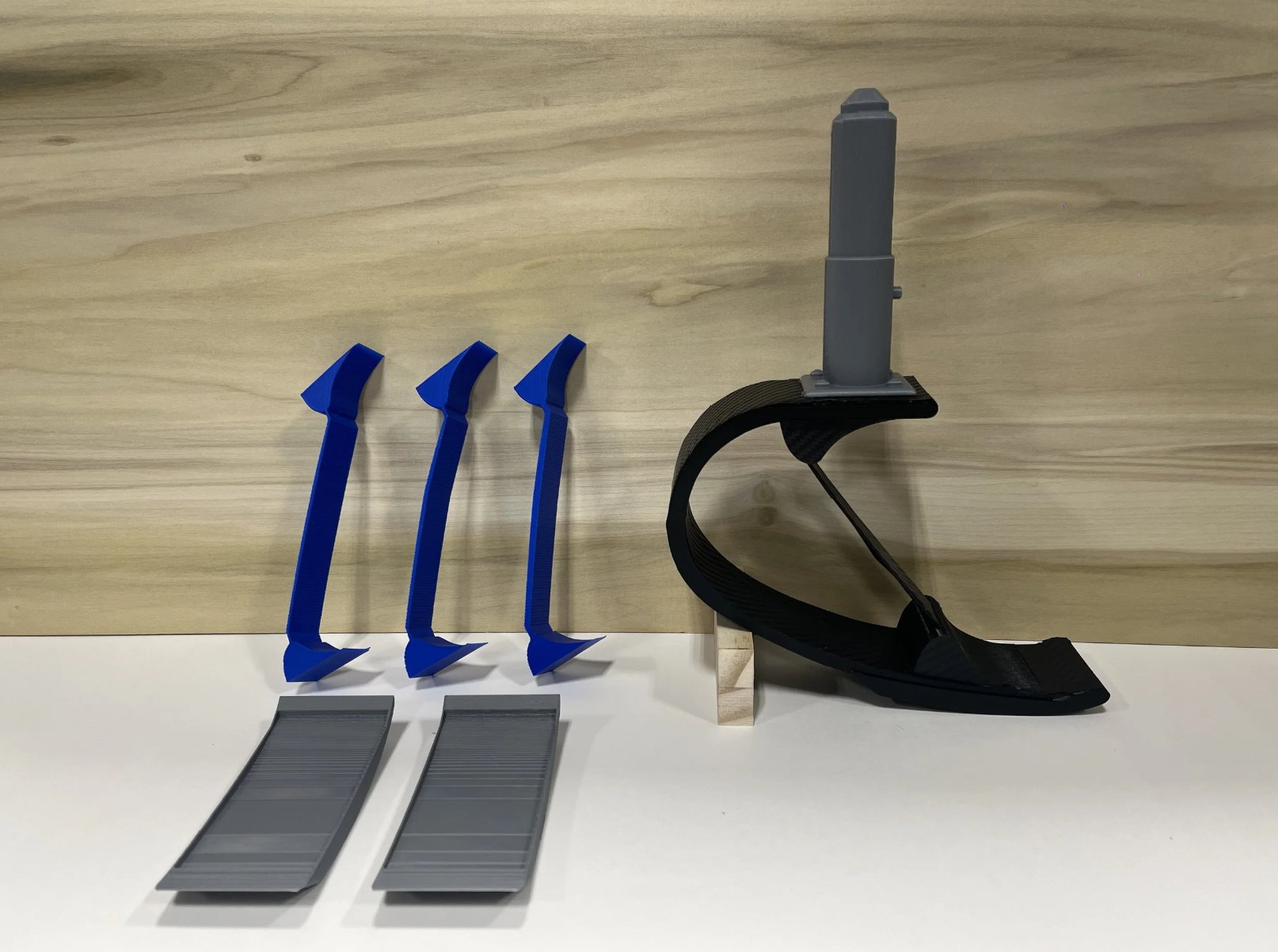
Final Prototype
Key Takeaways
SoleMate was one of my first opportunities to combine mechanical engineering with human-centered design. It taught me that a successful biomedical product cannot be designed around mechanics alone—the user’s comfort, growth, independence, cost, and relationship with the product all influence the engineering decisions. Iterating from sketches to physical prototypes also showed me how much stronger a design becomes through testing and real user feedback.
Project Overview
User-centered research and journey mapping
Concept development and physical prototyping
High-fidelity prototype fabrication and 3D printing
Design communication and project documentation